Engineered for minimally invasive procedures and rapid postoperative recovery, meeting the stringent clinical standards of Sweden's leading orthopedic centers.
Sweden represents one of the most sophisticated healthcare markets in Europe, characterized by a highly centralized public healthcare system (administered by the 21 regions), world-renowned research institutions like the Karolinska Institutet, and an exceptionally active population. The demand for sports medicine and orthopedic implants in Sweden is driven by two primary demographic forces: a highly active aging population ("baby boomers" maintaining intense physical activity) and a high participation rate in competitive and recreational sports, including winter sports (skiing, ice hockey), football, and floorball (innebandy).
According to clinical registries such as the Swedish Knee Arthroplasty Register and the Swedish National Knee Ligament Register, thousands of anterior cruciate ligament (ACL) reconstructions and meniscal repairs are performed annually. The Swedish orthopedic community places an extraordinary emphasis on evidence-based medicine, clinical efficacy, and long-term implant survivorship. Consequently, procurement departments in Swedish hospitals (such as Karolinska University Hospital, Sahlgrenska University Hospital, and Uppsala University Hospital) and private sports clinics demand medical devices that not only carry the CE mark (under the stringent EU MDR 2017/745) but also demonstrate superior biomechanical performance and biocompatibility.
In Sweden, the clinical pathway for sports injuries heavily favors outpatient, minimally invasive arthroscopic procedures. This minimizes hospital stays and accelerates the patient's return to work and sport. Implants such as ultra-high-molecular-weight polyethylene (UHMWPE) sutures, all-inside meniscal repair devices, and bioabsorbable interference screws are critical. Swedish orthopedic surgeons are pioneers in adopting advanced fixation techniques that preserve joint anatomy and maximize initial mechanical stability, reducing the risk of revision surgeries.
Leveraging state-of-the-art infrastructure to deliver OEM/ODM solutions that exceed European regulatory and clinical expectations.
As a premier Chinese developer and manufacturer of orthopedic implants and surgical instruments, HBM Medical Apparatus And Instruments Co., Ltd. (established in 2015) has engineered a robust supply chain that bridges high-volume manufacturing efficiency with the uncompromising quality required by the Swedish market. Our facility features a 100,000-class cleanroom environment, Swiss-type CNC longitudinal lathes, 5-axis machining centers, and advanced surface treatment systems.
Our competitive advantage lies in our deep integration of R&D and manufacturing. With 31 dedicated R&D engineers (including postgraduates and doctorates) and a rigorous quality management system certified under ISO 13485, MDSAP, and CE (MDR), we ensure that every suture anchor, meniscal stapler, and shaver blade matches or exceeds the performance of traditional Western tier-1 brands, at a highly optimized cost structure. This enables Swedish distributors and healthcare providers to achieve significant cost savings without compromising patient safety or clinical outcomes.
A technical breakdown of our sports medicine implant portfolio designed for long-term joint stability.
We utilize medical-grade PEEK (Polyetheretherketone) for suture anchors, providing excellent radiolucency, bone-like elastic modulus, and high fatigue resistance. For temporary fixation, our PLGA (poly(lactic-co-glycolic acid)) bioabsorbable interference screws offer controlled degradation kinetics, matching the natural healing rate of the reconstructed ligament while preventing long-term foreign body reactions.
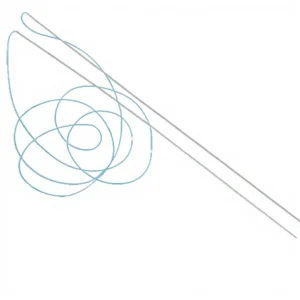
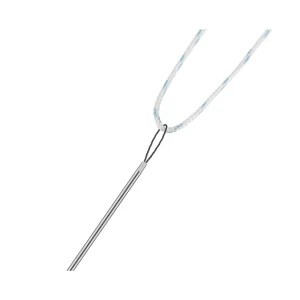
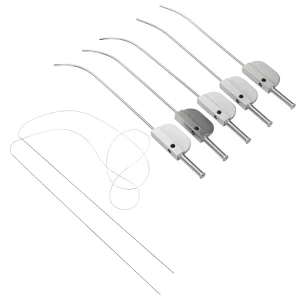
Our orthopedic sutures are braided from Ultra-High-Molecular-Weight Polyethylene (UHMWPE) and polyester, delivering exceptional tensile strength, superior knot security, and high abrasion resistance. This is critical for procedures like Bankart repair, rotator cuff repair, and ATFL reconstruction, where suture failure could lead to joint instability.
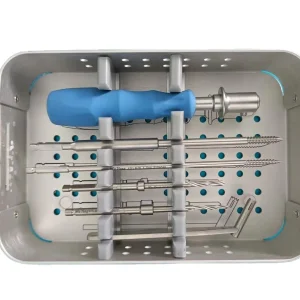
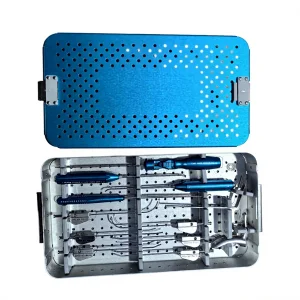
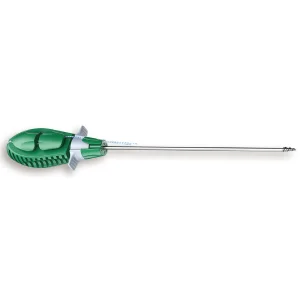
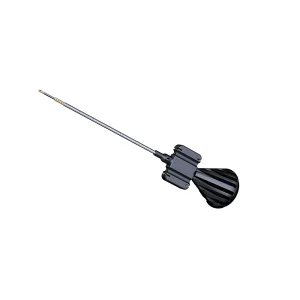
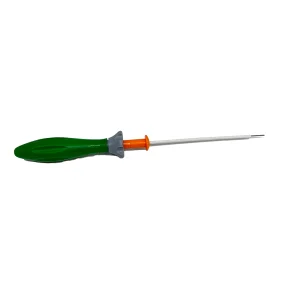
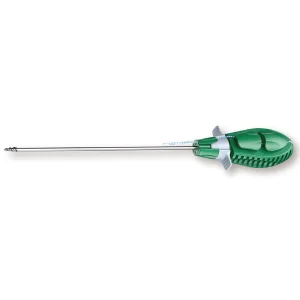
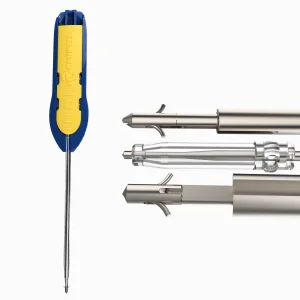
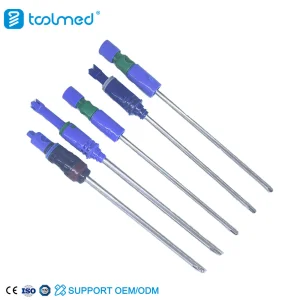
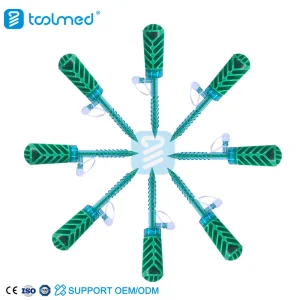
Minimally invasive surgery requires instruments of absolute precision. Our meniscus revision sets, reverse drills, and sterile cannulas are manufactured from high-grade surgical stainless steel and titanium alloys. They undergo rigorous passivation and sterilization validation to ensure smooth intraoperative handling, sharp cutting edges, and complete corrosion resistance.
During the Swedish winter season, regional trauma centers experience a surge in acute knee and shoulder injuries (ACL ruptures, meniscal tears, shoulder dislocations). Our Knot-free Titanium Suture Anchors and PLGA Bioabsorbable Interference Screws provide the high pull-out strength and rigid fixation required for immediate reconstruction, allowing professional and recreational skiers to initiate early mobilization protocols.
Ankle syndesmosis and lateral ligament (ATFL) injuries are highly prevalent in court and field sports. Our ATFL Repair System and 1.8mm Titanium Suture Anchors allow sports medicine specialists in metropolitan Swedish clinics to perform precise, minimally invasive anatomical reconstructions, minimizing scar tissue and accelerating the athlete's safe return to play (RTP).
Sweden has a highly developed veterinary medicine sector, with advanced animal hospitals (such as the SLU University Animal Hospital in Uppsala) performing complex orthopedic procedures on equine and canine patients. Our Titanium Handheld Veterinary Surgical Instruments and adjustable reverse drills are specifically configured to meet the anatomical demands of veterinary cruciate ligament repairs (TPLO/TTA procedures).
Explore our full line of CE-certified implants and instruments, engineered for global export and clinical reliability.
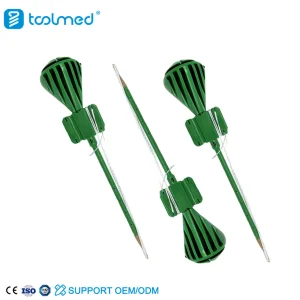
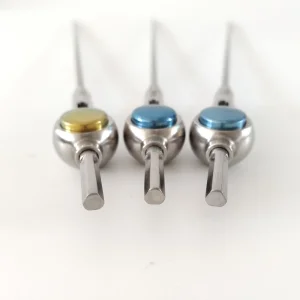
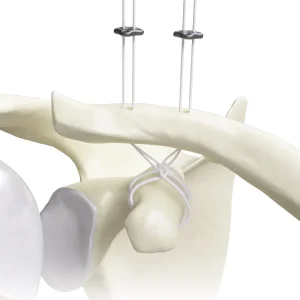
For international medical device distributors, hospital procurement managers, and OEM partners in Sweden and the wider Nordic region, selecting a manufacturing partner requires absolute confidence in regulatory compliance and batch-to-batch consistency. HBM Medical operates under a comprehensive quality management framework that ensures full traceability from raw materials to finished sterile products.
Every batch of titanium alloy, PEEK, or UHMWPE suture material is sourced from certified global suppliers and undergoes strict incoming inspection. We maintain complete material test reports (MTRs) and chemical composition analyses. Our 36 QA/QC inspectors monitor every stage of the 12 production lines, utilizing advanced coordinate measuring machines (CMM), optical comparators, and tensile testing equipment to guarantee that all dimensional tolerances and mechanical properties align with ASTM and ISO standards.
Navigating the transition from MDD to MDR in Europe has been a significant challenge for many exporters. HBM Medical has proactively aligned its technical documentation and clinical evaluation reports with the EU MDR (Regulation 2017/745). Our products carry valid CE certificates issued by prominent notified bodies, and our participation in the Medical Device Single Audit Program (MDSAP) demonstrates our compliance with the regulatory requirements of multiple global jurisdictions, simplifying the import and registration process for Swedish distributors.
Key insights for Swedish procurement managers and orthopedic distributors.
Optimize your supply chain with CE-certified, high-precision orthopedic implants and instruments. Contact our technical sales team today for samples, technical dossiers, and competitive pricing.
Send Inquiry Now HBM Medical