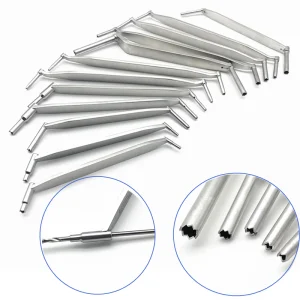
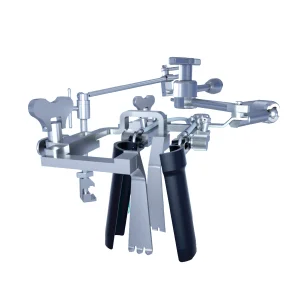
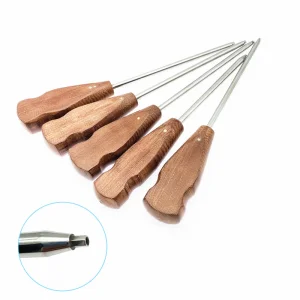
A comprehensive analysis of biomechanical fixation, material science, and global manufacturing standards in sports medicine.
Anterior Cruciate Ligament (ACL) reconstruction has transitioned from a highly invasive procedure to a refined, minimally invasive arthroscopic technique. At the core of this clinical success is the interference screw, a critical implant responsible for securing the tendon graft within the femoral and tibial bone tunnels. The primary biomechanical objective of an interference screw is to provide immediate, rigid fixation that resists physiological loads during the early post-operative phase, thereby facilitating optimal osteointegration.
Historically, metallic interference screws (primarily titanium alloys) were the gold standard due to their exceptional pull-out strength and structural integrity. However, the orthopedic industry has witnessed a significant paradigm shift. The demand for bioabsorbable polymers (such as PLLA, PLDLA, and composite materials incorporating Tricalcium Phosphate or Hydroxyapatite) and high-performance thermoplastics like PEEK (Polyetheretherketone) has surged. These advanced materials minimize long-term imaging artifacts, reduce the risk of secondary revision surgeries, and actively promote bone remodeling. As a premier OEM/ODM partner, HBM Medical is at the forefront of this material revolution, delivering customized engineering solutions that meet the rigorous demands of modern orthopedic surgery.
Addressing the critical requirements of international medical device distributors, brand owners, and healthcare systems.
Procuring medical implants on a global scale requires navigating complex regulatory landscapes, strict quality assurance protocols, and volatile supply chains. For global brand businesses, wholesalers, and medical device exporters, partnering with a manufacturer that possesses robust vertical integration is paramount. The modern procurement officer does not merely look for a supplier; they seek a strategic partner capable of mitigating risks associated with raw material traceability, regulatory compliance (such as EU MDR and US FDA), and production scalability.
At HBM Medical, we address these challenges head-on. With over 10 years of exporting experience and a dedicated team of 31 R&D engineers, we provide comprehensive OEM/ODM services that streamline the transition from initial concept to commercial distribution. Our state-of-the-art facility is equipped with 12 specialized production lines, ensuring an uninterrupted supply of high-precision interference screws and associated surgical instruments. By maintaining complete control over our manufacturing processes—from raw material sourcing to final sterile packaging—we guarantee unmatched quality and reliability for our global partners.
Our manufacturing processes are fully certified under ISO 13485, MDSAP, and CE (MDR) standards, ensuring seamless market entry across Europe, North America, and Asia-Pacific regions.
Leveraging advanced CAD/CAM modeling and high-precision CNC Swiss machining, we accelerate the R&D cycle, allowing our clients to launch innovative products ahead of the competition.
We provide 100% raw material traceability, backed by metallurgical test reports and comprehensive QA/QC documentation, ensuring every implant meets clinical safety standards.
Engineered for optimal biomechanical performance, thread engagement, and osteointegration.
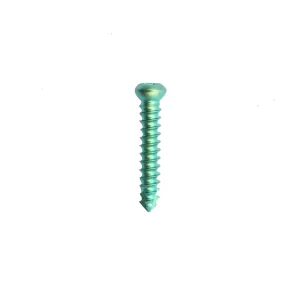
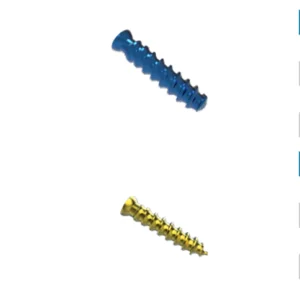
HBM Medical's interference screws are engineered to deliver superior pull-out strength while minimizing graft laceration. Our design portfolio includes fully threaded, cannulated, and round-head configurations, available in both metallic and polymeric materials. We offer extensive customization options, including thread pitch optimization, drive interface variations (e.g., hexalobe, star, or square), and custom sizing to accommodate diverse patient anatomies.
| Material Option | Diameter Range (mm) | Length Range (mm) | Drive Type | Key Clinical Advantage |
|---|---|---|---|---|
| Titanium Alloy (Ti-6Al-4V ELI) | 5.0 - 11.0 | 15 - 35 | Hexalobe / Star | Maximum mechanical strength, excellent biocompatibility, and proven long-term clinical history. |
| PEEK-OPTIMA® / PEEK | 6.0 - 10.0 | 20 - 30 | Hexalobe / Custom | Zero imaging artifacts (MRI compatible), modulus of elasticity close to cortical bone, high fatigue resistance. |
| Bioabsorbable (PLDLA + HA/TCP) | 7.0 - 10.0 | 20 - 30 | Hexalobe / Square | Gradual degradation matched with bone remodeling, osteoconductive properties to promote tunnel healing. |
Inside HBM Medical's state-of-the-art production facility and rigorous testing protocols.
Our production site spans over 30,343 square meters and is equipped with more than 350 advanced processing and testing units, including high-precision CNC Swiss-type lathes, multi-axis machining centers, and automated cleaning lines. This massive infrastructure allows us to maintain a highly stable manufacturing environment, ensuring that every batch of interference screws exhibits identical dimensional accuracy and mechanical properties.
Quality control is not just a department at HBM Medical; it is the foundation of our corporate culture. With 36 dedicated QA/QC inspectors, we conduct rigorous testing at every stage of the production cycle. Our testing protocols include:
Pioneering the next generation of bioactive implants and smart surgical instrumentation.
The future of sports medicine implants lies in the integration of biological activity and smart engineering. HBM Medical's R&D division is actively developing next-generation bioactive interference screws. These advanced implants are designed to not only provide mechanical fixation but also actively accelerate the biological healing process at the graft-to-bone interface. By incorporating osteoinductive growth factors and advanced porous structures, these future implants will significantly reduce recovery times for athletes and patients worldwide.
Furthermore, we are expanding our digital manufacturing capabilities. By integrating 3D printing (additive manufacturing) for customized surgical guides and instruments, we enable surgeons to perform highly personalized ACL reconstructions. Our technical roadmap focuses on reducing surgical complexity, improving implant placement accuracy, and enhancing patient outcomes through continuous technological innovation.
Expert answers to common technical, regulatory, and procurement questions regarding ACL interference screws.
 HBM Medical