Product innovation in orthopedic implants means more than launching a new device. It combines clinical evidence, material science, surgical experience, and safer manufacturing. The need is substantial. The World Health Organization reports that musculoskeletal conditions affect approximately 1.71 billion people worldwide. Hip and knee disease remains a major source of pain, reduced mobility, and healthcare expenditure. The American Joint Replacement Registry’s 2024 Annual Report also shows continued growth in arthroplasty procedures and revision monitoring. Yet volume alone does not prove progress.
Sir John Charnley, a pioneer of modern hip replacement, stated, “The surgeon who undertakes total hip replacement must be prepared to devote his life to it.” His warning still matters. An implant must survive real movement, imperfect bone, changing patient lifestyles, and years of biological stress. The U.S. Food and Drug Administration’s total product life-cycle approach emphasizes design controls, biocompatibility, clinical evaluation, and post-market surveillance. The AAOS similarly supports evidence-based decisions that connect implant selection with patient outcomes. Innovation should therefore be measurable.
Why is product innovation important for orthopedic implants? Better designs may reduce wear, improve fixation, shorten recovery, and support more precise surgery. Porous titanium surfaces, patient-specific planning, and robotic assistance illustrate this direction. However, novelty can become a distraction. A new coating may look impressive in a laboratory but perform differently after ten years inside the body. Cost, training, revision risk, and unequal access also deserve attention. Product innovation is valuable only when it creates durable, verifiable benefits for patients, surgeons, and healthcare systems. That standard is demanding. It should be.
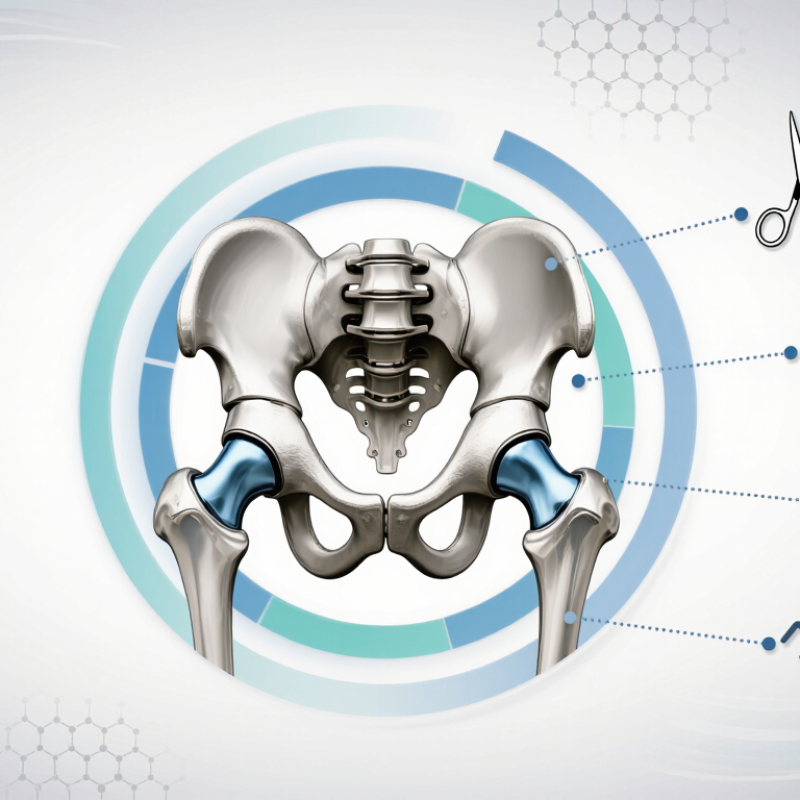
Product innovation in orthopedic implants means creating or improving a device to solve a clinical problem more safely and effectively. It includes new materials, implant shapes, fixation methods, instruments, and delivery systems. The scope is broader than inventing a completely new implant. A revised surface coating or a better screw angle may also qualify. Small changes matter.
Evaluation must connect design decisions with patient needs. Engineers may study stress distribution, wear, corrosion, and sterilization stability. Surgeons often examine handling, visibility, and placement accuracy during realistic procedures. Clinical teams then consider pain, mobility, revision rates, and recovery time. A promising laboratory result is not enough. Evidence can remain incomplete.
Tips: Define the unmet need before designing the product. Compare the proposed device with current clinical practice, not only with older implants. Record material sources, manufacturing controls, and test conditions. Review risks across the entire lifecycle, including implantation, follow-up, and possible removal. Innovation should also support clear training and reliable surgical use. This is where many concepts become less impressive. Simplicity may be overlooked.
Product innovation in orthopedic implants is the development or meaningful improvement of implant products, materials, designs, manufacturing methods, or integrated clinical functions to improve patient outcomes, safety, usability, durability, and value across the implant life cycle.
| Innovation Dimension | Definition and Scope | Representative Product Examples | Clinical or Product Value | Typical Evaluation Indicators | Relevant Development Considerations |
|---|---|---|---|---|---|
| Advanced Implant Materials | Use of materials with improved mechanical, biological, or chemical performance compared with conventional implant materials. |
|
May improve strength, wear resistance, corrosion resistance, biocompatibility, or compatibility with the intended anatomical site. | Tensile and fatigue strength, wear rate, corrosion behavior, fracture toughness, chemical stability, and biocompatibility results. | Material characterization, biological safety, sterilization compatibility, and long-term mechanical testing. |
| Surface Engineering and Coatings | Modification of the implant surface to influence fixation, tissue response, wear behavior, or resistance to environmental degradation. |
|
Can support bone ingrowth, improve implant fixation, reduce wear, or modify the interaction between the implant and surrounding tissue. | Coating adhesion, pore characteristics, surface roughness, wear particles, corrosion resistance, and bone–implant interface performance. | Coating durability, particle generation, delamination risk, manufacturing consistency, and biological response assessment. |
| Geometry and Mechanical Design | Redesign of implant shape, dimensions, stiffness, load path, or fixation features to better match anatomy and biomechanical requirements. |
|
May improve anatomical fit, stability, range of motion, fixation, bone preservation, and restoration of joint or skeletal function. | Range of motion, implant migration, fixation strength, stress distribution, subsidence, dislocation behavior, and fatigue life. | Anatomical variability, finite-element analysis, cadaver or laboratory testing, and comparison with established designs. |
| Additive Manufacturing | Layer-by-layer production of implants or implant components to create complex geometries, internal porosity, or patient-specific structures. |
|
Enables design freedom, customized anatomy, controlled porosity, and potentially more efficient material use. | Dimensional accuracy, pore size and connectivity, density, surface quality, mechanical strength, fatigue performance, and reproducibility. | Powder or feedstock control, process validation, post-processing, cleaning, sterilization, and inspection of internal structures. |
| Patient-Specific and Personalized Implants | Implant configuration is adapted to an individual patient’s anatomy, bone defect, disease condition, or surgical plan. |
|
May improve reconstruction of complex defects, surgical planning, implant fit, and the ability to address unusual anatomy. | Fit accuracy, defect coverage, planned-versus-achieved implant position, surgical time, and complication profile. | Medical imaging quality, design verification, manufacturing traceability, prescription requirements, and patient-specific validation. |
| Fixation and Interface Innovation | Improvements to the way an implant is attached to bone or soft tissue, including cemented, cementless, screw-based, and hybrid fixation approaches. |
|
Can increase initial stability, support long-term fixation, reduce micromotion, and facilitate management of complex revisions. | Pull-out strength, insertion torque, micromotion, migration, fixation failure, radiographic integration, and revision rate. | Bone quality, loading conditions, surgical technique, implant–instrument compatibility, and mechanical interface testing. |
| Bearing and Wear Innovation | Development of articulating surfaces and material combinations intended to reduce wear, friction, and biologically active wear debris. |
|
May support longer implant service life and reduce adverse biological responses associated with excessive wear debris. | Gravimetric wear, volumetric wear, friction, particle size distribution, oxidation, surface damage, and simulator performance. | Joint-specific loading profiles, alignment sensitivity, lubrication conditions, debris characterization, and long-term testing. |
| Implant–Instrument Integration | Product innovation that improves the interaction between the implant, surgical instruments, trial components, and implantation workflow. |
|
Can improve surgical accuracy, ease of use, workflow efficiency, and control of implant positioning. | Instrument accuracy, assembly time, handling errors, surgical time, positioning accuracy, and user usability results. | Human factors engineering, cleaning and sterilization, compatibility testing, labeling, and surgical training requirements. |
| Digital Planning and Surgical Guidance | Use of imaging, software, navigation, robotics, or digital workflows to plan and execute implant placement; the digital function may be part of the broader product system. |
|
May improve planning consistency, implant alignment, component positioning, and management of complex anatomy. | Planning-to-execution accuracy, alignment parameters, workflow time, system availability, usability, and intraoperative error rates. | Software validation, cybersecurity, imaging-data integrity, interoperability, operator training, and clinical workflow controls. |
| Smart and Sensor-Enabled Implants | Integration of sensing or communication capabilities to monitor loading, temperature, pressure, movement, or other physiological and mechanical parameters. |
|
May provide objective information about implant loading, rehabilitation progress, fixation behavior, or early changes requiring clinical attention. | Measurement accuracy, signal stability, battery or power performance, data integrity, biocompatibility, and communication reliability. | Electrical safety, wireless security, hermetic sealing, electromagnetic compatibility, software lifecycle, and clinical data governance. |
| Biological and Regenerative Functions | Implant features designed to interact with biological processes such as bone formation, tissue integration, infection control, or controlled local delivery. |
|
May support tissue integration, address bone defects, or provide a more biologically compatible pathway for reconstruction. | Cell response, bone formation, degradation profile, local tissue response, mechanical retention, and infection-related outcomes. | Biological mechanism, degradation products, combination-product considerations, preclinical evidence, and clinical benefit-risk assessment. |
| Safety and Infection-Risk Reduction | Design or material changes intended to reduce procedural hazards, contamination risk, implant failure, or adverse tissue reactions. |
|
May reduce avoidable procedural risks, improve handling reliability, and support safer implantation and postoperative recovery. | Sterility assurance, contamination controls, adverse-event rates, dislocation or loosening rates, and handling-error frequency. | Risk management, usability validation, sterile-barrier validation, packaging integrity, and post-market surveillance. |
| Sustainability and Life-Cycle Design | Product innovation that considers material efficiency, manufacturing waste, packaging, energy use, reprocessing, and end-of-life requirements without compromising clinical safety. |
|
Can reduce environmental burden, improve resource efficiency, and support more responsible product life-cycle management. | Material utilization, manufacturing waste, packaging volume, energy consumption, product yield, and life-cycle environmental impact. | Clinical equivalence, sterilization performance, packaging protection, supply-chain controls, and documented life-cycle assumptions. |
| Regulatory and Evidence Scope | Product innovation includes not only the physical implant but also the evidence, risk controls, manufacturing process, labeling, and post-market monitoring needed to demonstrate safety and performance. |
|
Establishes whether an innovative implant delivers a favorable benefit–risk profile and performs as intended in its target patient population. | Risk-control effectiveness, test acceptance criteria, clinical outcomes, complaint trends, revision rates, and real-world performance. | Requirements vary by jurisdiction, device classification, intended use, novelty, biological characteristics, and level of clinical risk. |
It includes new materials, shapes, coatings, fixation methods, instruments, and delivery systems. Small changes matter. A better screw angle may improve placement accuracy without creating a completely new implant.
Innovation may target painful loosening, poor fit, difficult revisions, limited movement, or slow recovery. The problem should guide the design. A new material alone is not a sufficient reason for development.
Teams study stress distribution, wear, corrosion, fatigue, sterilization stability, and tissue response. Surgeons also assess handling and visibility during realistic procedures. Laboratory success is only one piece of evidence.
Bone quality, activity levels, and healing capacity vary between patients. Adjustable geometries and patient-specific planning may improve fit. No design solves every case.
Manufacturing conditions must remain consistent across production batches. Layered fabrication can create useful internal structures, but tiny defects may weaken performance. Record material sources, controls, and test conditions carefully.
Improved geometry may support bone growth and reduce early loosening. Digital planning can help match implant position with individual anatomy. Patients may experience better mobility, comfort, and recovery, though results differ.
Possible risks include wear particles, infection, fractures, migration, and revision surgery. Early results may look attractive. Long-term evidence can still be incomplete.
Ask about survivorship data, revision rates, comparable patients, and follow-up plans. Discuss bone quality, allergies, activity goals, and possible removal. Also ask what happens if the design fails.
Product innovation in orthopedic implants refers to the continuous development of implant designs, materials, manufacturing methods, and clinical solutions to better address patient needs. It is driven by challenges such as aging populations, complex injuries, implant wear, infection risks, and the need for faster recovery. New materials, surface treatments, digital planning, additive manufacturing, and improved biomechanical designs can enhance strength, durability, compatibility, stability, and personalization. Why is product innovation important for orthopedic implants? It helps improve treatment outcomes, support more natural movement, reduce complications, and provide solutions for patients with different anatomical and lifestyle requirements.
The innovation process typically begins with clinical research and concept development, followed by laboratory testing, prototype refinement, safety evaluation, and carefully controlled clinical use. Although innovation offers significant benefits, it also involves risks, including unexpected material behavior, surgical learning curves, long-term uncertainty, and regulatory challenges. Future development will likely focus on personalized implants, smarter data-supported designs, bioactive surfaces, sustainable production, and technologies that promote better integration with the body while maintaining patient safety.

 HBM Medical