Why Is Hygiene Critical in Orthopedic Implant Production?
Why is hygiene control important in orthopedic implants production? The answer begins with patient safety. An orthopedic implant enters a sensitive biological environment. Even tiny residues, particles, or microorganisms can create serious complications. Infection may delay healing, damage surrounding tissue, or require revision surgery.
In practical production, hygiene reaches every stage. Operators monitor cleanroom air, surface bioburden, water quality, and equipment contact points. Titanium components may pass through ultrasonic cleaning, rinsing, drying, and controlled packaging. A single fiber inside a sterile pouch can raise uncomfortable questions. Was the cleaning cycle validated? Was the packaging seal inspected? Was the particle source traced?
Dr. Steven M. Kurtz, a recognized orthopedic implant researcher, has emphasized, “Implant safety depends on controlling every variable that can affect performance.” His statement reflects a central manufacturing truth. Hygiene is not merely visual cleanliness. It supports material integrity, sterilization reliability, and long-term implant performance.
Yet hygiene control is not a magic shield. Processes can appear excellent while small weaknesses remain hidden. Human handling, rushed inspections, or incomplete records may undermine a strong quality system. That is why experienced teams combine validated procedures, environmental monitoring, employee training, and complete traceability.
The details matter.
A clean implant protects more than a production target. It protects mobility, recovery time, and patient confidence. This article examines the controls, risks, and practical decisions that make orthopedic implant production safer and more dependable.
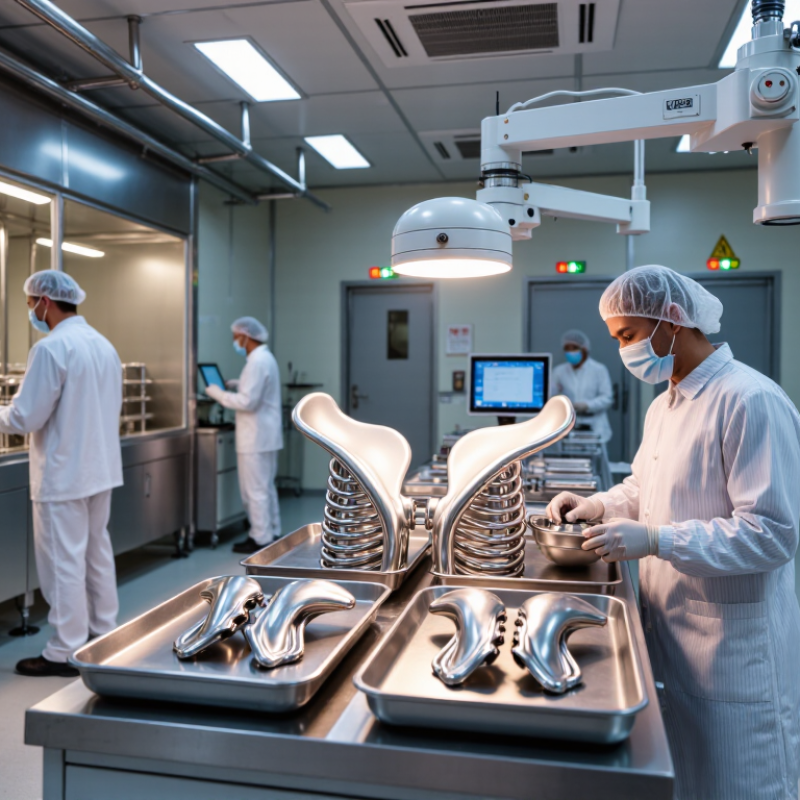
In orthopedic implant production, hygiene means controlling contamination at every stage, not simply keeping surfaces visibly clean. A polished floor proves little. Dust, skin particles, moisture, and microorganisms can still enter critical areas. These contaminants may affect implant safety, packaging integrity, or later sterilization performance. Hygiene begins with facility design, controlled airflow, suitable materials, and clear movement routes for people and components.
Operators need practical training in hand hygiene, gowning, glove changes, and equipment handling. Small habits matter. Touching a cleaned tool with an unsuitable glove can undo careful preparation. Production rooms require scheduled cleaning, approved agents, defined contact times, and documented checks. Cleaning tools must also be controlled, because a dirty mop can spread contamination instead of removing it. Raw materials and finished components should remain separated, labeled, and protected during transfer.
Reliable hygiene depends on evidence. Teams should monitor environmental conditions, review cleaning records, investigate unusual results, and connect findings with batch traceability. Risk-based procedures are more useful than impressive paperwork. No process is flawless. A rushed inspection, unclear responsibility, or missed trend can weaken an otherwise strong system. Regular audits and honest review help reveal these gaps before they become serious. Hygiene is therefore a daily production discipline, supported by trained people, validated processes, and decisions that can be explained.
Why Is Hygiene Critical in Orthopedic Implant Production?
How Contamination Enters the Implant Manufacturing Process
In orthopedic implant production, contamination rarely arrives as one dramatic event. It often enters through ordinary movement: uncovered hair, glove contact, airborne particles, or residue on a machined surface. A technician may touch a tablet, adjust safety glasses, and return to the work area without noticing. Small lapses matter. Metal dust from drilling can settle inside threads, while cleaning chemicals may remain in microscopic recesses. Water quality also matters. Poorly controlled rinse water can carry microbes, ions, or residues into a validated cleaning stage. In production audits, the highest-risk points are often transitions between rooms, tools, and operators. Material carts, packaging, and maintenance instruments can bypass the intended hygiene flow.
Controls must match these entry routes. Facilities use classified environments, controlled personnel flow, suitable protective clothing, filtered air, and documented cleaning procedures. Operators inspect gloves before handling implants and replace them after contact with non-controlled surfaces. Manufacturing engineers monitor particle counts, bioburden, residues, and cleaning effectiveness through defined sampling plans. These records support traceability and help distinguish a process failure from an isolated observation. Still, paperwork is not proof by itself. A spotless room can hide weak habits. That uncomfortable possibility deserves regular review.
Effective hygiene depends on training, but training alone is not enough. Equipment design can create blind spots where particles collect and cleaning agents fail to reach. Routine maintenance should examine seals, transfer points, air pressure, and cleaning tools. Even a rushed shift change can introduce risk. Each contamination pathway should be mapped, tested, and revised when evidence exposes a weakness.
Why Is Hygiene Critical in Orthopedic Implant Production?
Sterility protects patients from implant-related infections that can begin with invisible contamination. An orthopedic implant enters deep tissue, where bacteria may attach to its surface and form a persistent biofilm. This infection can cause pain, delayed healing, revision surgery, or implant removal. The danger is often silent.
In a controlled production area, hygiene involves more than clean gloves. Operators manage gowning, air movement, surface cleaning, and material transfer. A single fiber, skin particle, or unclean tool can introduce contamination. Regular environmental monitoring helps detect microorganisms before they reach the implant. Testing also examines sterilization performance, packaging integrity, and potential endotoxin contamination.
Traceability supports reliable decisions. Each production batch should connect to cleaning records, equipment checks, personnel training, and sterilization results. These details matter when an unexpected result appears. Small details matter.
No manufacturing process is flawless. A checklist may be complete yet fail to reflect an unusual handling mistake. For that reason, teams need practical observations, honest reporting, and periodic review of real production behavior. Staff should question unclear steps instead of silently following them. Sterility assurance depends on validated methods, disciplined habits, and the willingness to investigate weak points before a patient is exposed.
| Hygiene Dimension | Relevant Data or Requirement | Why It Matters for Orthopedic Implants | Common Reference |
|---|---|---|---|
| Implant-related infection risk | Periprosthetic joint infection after primary total joint arthroplasty is commonly reported at approximately 1%–2%, although rates vary by procedure, patient population, follow-up period, and clinical practice. | Even a low infection rate can result in revision surgery, prolonged antibiotic treatment, impaired mobility, and substantial healthcare burden. | Orthopedic infection literature; national joint-replacement surveillance reports |
| Sterility assurance level | A validated terminal sterilization process is commonly designed to achieve a sterility assurance level of 10−6, meaning a theoretical probability of no more than one non-sterile item in one million sterilized items. | Sterility assurance reduces the likelihood that viable microorganisms are introduced directly into the surgical site. | ISO 11135, ISO 11137, ISO 17665 |
| ISO Class 5 cleanroom particle limit | Maximum concentration for particles ≥0.5 µm: 3,520 particles/m³ under the applicable classification condition. | Lower airborne particle levels help control particulate contamination and reduce the opportunity for microorganisms to enter exposed components or packaging. | ISO 14644-1 |
| ISO Class 7 cleanroom particle limit | Maximum concentration for particles ≥0.5 µm: 352,000 particles/m³ under the applicable classification condition. | ISO Class 7 areas are often used for controlled manufacturing, assembly, or support activities, depending on the validated process and product risk. | ISO 14644-1 |
| ISO Class 8 cleanroom particle limit | Maximum concentration for particles ≥0.5 µm: 3,520,000 particles/m³ under the applicable classification condition. | This classification can support less critical controlled areas, but it does not by itself demonstrate product sterility. | ISO 14644-1 |
| Bacterial endotoxin control | For many medical devices, a commonly applied endotoxin screening limit is 20 endotoxin units (EU) per device; product-specific requirements may be lower or otherwise defined by risk assessment and intended use. | Sterilization may inactivate microorganisms but does not necessarily remove endotoxins, which can trigger fever, inflammation, or other adverse biological responses. | FDA endotoxin guidance and device-specific validation requirements |
| Personnel hand hygiene | Alcohol-based hand rubbing generally requires approximately 20–30 seconds; handwashing with soap and water generally requires approximately 40–60 seconds. | Hands and gloves can transfer microorganisms to components, tools, packaging, and contact surfaces during manufacturing and inspection. | World Health Organization hand-hygiene guidance |
| Bioburden monitoring | Bioburden must be measured using a validated, product-specific method. There is no single universal acceptable bioburden limit for every orthopedic implant. | Trend data help detect process drift before microorganisms challenge the sterilization process or compromise product quality. | ISO 11737-1 |
| Packaging integrity | Sterile barrier systems must be validated for design, sealing, distribution, aging, and integrity throughout the claimed shelf life. | A sterile implant can become contaminated if its packaging is punctured, poorly sealed, damaged during transport, or degraded during storage. | ISO 11607-1 and ISO 11607-2 |
| Terminal sterilization preference | When a product and packaging can tolerate the process, terminal sterilization is generally preferred over aseptic processing because the product is sterilized after final packaging. | Sterilizing the finished, sealed product provides an additional contamination-control barrier after assembly. | ISO 14937 and applicable sterilization standards |
| Environmental monitoring | Monitoring typically includes airborne particles, viable microorganisms, surfaces, personnel, temperature, humidity, and pressure differentials according to a documented risk-based program. | Routine monitoring verifies that the controlled environment remains within validated conditions and supports early corrective action. | ISO 14644 series and applicable quality-system requirements |
| Material and surface cleaning | Cleaning processes should be validated for removal of residues, particles, processing oils, and other contaminants before sterilization or final packaging. | Residual contamination can interfere with sterilization, affect material performance, and cause inflammatory or toxicological responses. | ISO 19227 and risk-based process validation principles |
Note: Numerical values are general industry or standards-based benchmarks. Applicable limits and process parameters must be established and validated for the specific implant, sterilization method, packaging system, and intended clinical use.
In orthopedic implant production, hygiene is not merely visual cleanliness. Tiny particles, residues, or microbes can affect surface performance and patient safety. Materials should arrive sealed, identified, and protected from moisture and dust. Stainless steel, polymers, and coatings require compatible cleaning methods. A process that cleans one material may damage another. Each cleaning step needs validation, defined limits, and traceable records. Material movement should prevent mix-ups and unnecessary exposure.
Equipment hygiene depends on design and discipline. Tools should have smooth, accessible surfaces, with few areas that trap residue. Cleaning agents, rinse water, and compressed air must meet specified quality requirements. Production areas need controlled airflow, temperature, humidity, and particle levels. Personnel should follow gowning procedures and hand hygiene before entering controlled zones. Environmental monitoring can reveal trends before they become failures. Still, a spotless room is not proof of control. Sampling may miss a problem, and procedures may be followed only on paper. Regular audits, retraining, and honest deviation reports make the system more reliable.
Tips:
Separate clean and dirty routes. Label every container. Inspect equipment after cleaning, not only before use. Record who cleaned it, when, and with which method. Review particle and microbiological data together. If a result seems unusual, pause and investigate rather than dismissing it. Small gaps in routine can become serious weaknesses.
because the device enters a highly sensitive environment. Even tiny particles, oil residues, or microbial contaminants may increase clinical risk. Cleanliness must be controlled throughout machining, washing, handling, and packaging.
Operators may use purified water, controlled detergents, ultrasonic cleaning, or carefully monitored rinsing. Each method requires validation on representative implant materials and shapes. Complex threads and narrow cavities deserve special attention. They can retain residues.
Trained personnel examine surfaces under suitable lighting and magnification. Laboratory tests may assess particulate matter, organic residues, bioburden, or endotoxin levels. Rinse samples can reveal contamination that a visual inspection misses.
Equipment is calibrated, cleaning baths are monitored, and environmental conditions are recorded. Every lot receives traceable documentation.
A clean glove can still touch an unclean surface. Packaging materials also require control.
Before release, quality teams review test results, process records, and any deviations.
If a result fails, the lot should not be accepted through assumption or convenience. The cause must be investigated, and corrective actions must be verified.
This remains a practical weakness. Human attention varies, and some residues are difficult to detect. Continuous training, periodic process revalidation, and honest review of near misses help manufacturers improve implant cleanliness.
Hygiene means controlling contamination throughout design, machining, cleaning, handling, and packaging. A polished floor is not enough. Dust, moisture, skin particles, and microorganisms can still enter critical areas.
Materials should arrive sealed, labeled, and protected from moisture and dust. Raw materials and finished components need separate routes. Clear labels help prevent mix-ups and unnecessary exposure.
Operators must perform hand hygiene, gown correctly, and change gloves when needed. A clean glove can touch an unclean surface. Small mistakes can undo careful preparation.
Equipment should have smooth, accessible surfaces with few residue-trapping areas. Cleaning agents, rinse water, and compressed air must meet defined quality requirements. Cleaning tools also need control. A dirty mop can spread contamination.
Manufacturers validate cleaning methods using representative materials, shapes, and difficult features. Threads and narrow cavities may retain residues. Visual checks alone can miss particles or organic contamination.
Testing may examine particles, organic residues, microbial levels, or endotoxins. Rinse samples can reveal contamination hidden from visual inspection. Lighting and magnification support trained inspection. No inspection catches everything.
Teams record who cleaned equipment, when it was cleaned, and which method was used. They also document environmental conditions, test results, and deviations. Batch records connect findings with specific production lots.
The result should be paused, investigated, and linked to possible causes. A failed lot should not pass through assumption or convenience. Corrective actions require verification. The honest answer may expose a weak process.
No. Sampling may miss contamination, and written procedures may not reflect actual behavior. Audits, retraining, trend reviews, and process revalidation strengthen control. Some weaknesses remain. Regular review helps reveal them earlier.
Hygiene is a fundamental part of orthopedic implant production because even microscopic contamination can affect product safety and patient recovery. Why is hygiene control important in orthopedic implants production? It helps prevent bacteria, particles, chemicals, and other contaminants from entering during material handling, machining, cleaning, assembly, packaging, or storage. Since implants are placed inside the body, effective cleanliness and sterility controls are essential for reducing the risk of implant-related infections and supporting reliable clinical performance.
Manufacturers maintain hygiene through controlled production areas, suitable protective practices, properly cleaned equipment, and carefully managed raw materials. They also establish procedures for environmental monitoring, personnel training, cleaning validation, sterilization, and contamination prevention. Regular inspections, testing, documentation, and process reviews help verify that implants meet defined cleanliness requirements. By combining strong hygiene standards with continuous verification, manufacturers can protect patients, improve product consistency, and maintain confidence in the safety and quality of orthopedic implants.

HBM Medical