Emergency orthopedic care leaves little room for guesswork. The World Health Organization’s Global Status Report on Road Safety 2023 estimates that road crashes kill about 1.19 million people each year, with many more sustaining injuries. Not every injury requires surgery, but the figures show why hospitals need dependable trauma supplies. Time matters.
For buyers comparing Chinese orthopedic implants, “top” should mean clinically appropriate, consistently manufactured, and ready for the intended procedure—not simply low-cost or quickly shipped. How to select orthopedic implants for emergency medical use depends on practical checks: implant material and dimensions, instrument compatibility, sterile packaging, batch traceability, and reliable access to replacement components. A plate that fits the fracture but not the available screwdriver set can delay care. Small details matter.
WHO’s report describes the scale of road injury; it does not rank implant brands or certify individual products. Procurement teams should therefore review current product documentation, manufacturing quality records, applicable registrations, and supplier evidence directly. They should also confirm local clinical requirements with qualified surgeons and hospital procurement staff. For China-sourced products, assess the specific manufacturer and product line rather than relying on country-of-origin claims. Verify lead times, emergency stock, and the process for handling damaged packaging or size mismatches. These checks are not glamorous, and some are easy to overlook under pressure. Yet a careful selection process can make emergency stock more usable when minutes count.
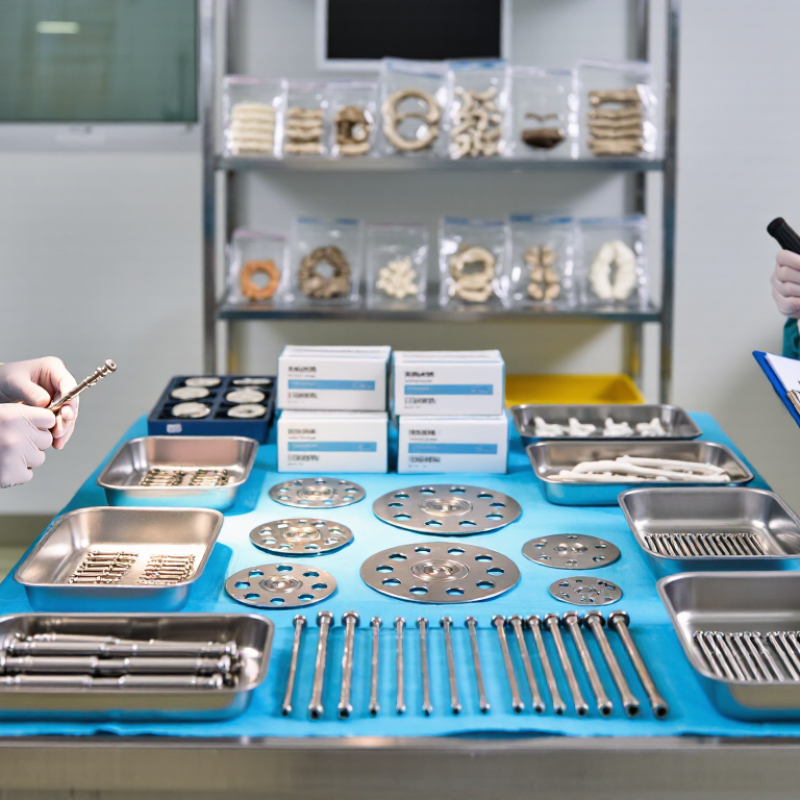
An emergency orthopedic request should begin with the injury, not a product catalogue. Is the problem a long-bone fracture, a joint fracture, or an unstable pelvic injury? Record the location, fracture pattern, open or closed status, and any urgent soft-tissue concerns. Imaging and examination help the treating team define the plan. Details matter.
The required implant type depends on the fracture and the patient’s anatomy. A shaft fracture may call for an intramedullary nail or plate system; a fracture near a joint may need a plate with appropriately angled screws. Some injuries require temporary external fixation while the patient is stabilized. Bone quality, available surgical access, and compatible instruments also affect the choice. This step can seem obvious. It is not.
For sourcing from China during an emergency, confirm the exact system, sizes, material, sterile packaging, and instrument availability with the clinical team. Check product documentation and traceability, and verify that the supplied components match the intended procedure. Do not substitute a similar-looking implant without the surgeon’s approval. Logistics can be imperfect, and stock lists may lag behind reality. A clear request, including imaging findings and required sizes, helps reduce avoidable delays; the final selection belongs to qualified clinicians.
How to read this chart: Each colored segment represents an implant family that may be considered for the injury type shown. These are potential options, not treatment recommendations; the appropriate choice depends on fracture pattern, soft-tissue condition, patient factors, and clinical assessment.
Emergency implant selection starts with the fracture pattern, not the product catalogue. The GBD 2019 Fracture Collaborators estimated 178 million new fractures worldwide in 2019, underscoring the varied demands on trauma services. For a long-bone shaft fracture, an intramedullary nail may provide load-sharing fixation. Plates and screws can suit fractures near joints, where careful alignment of the joint surface matters. Fit matters.
For unstable proximal femur fractures, teams may consider a cephalomedullary nail or a sliding hip screw, depending on fracture geometry and local protocol. External fixation can provide temporary or definitive stability when soft-tissue damage makes internal fixation unsuitable. Open wounds, swelling, bone quality, and the patient’s overall condition can change the plan. A category that looks right on an X-ray may still be wrong for the tissue around it.
When evaluating China-sourced implants, check that the available sizes match the patient’s anatomy and the treating team’s established system. Review material specifications, sterile packaging, traceability, and instrument compatibility before an emergency occurs. Confirming these details with the surgeon and procurement team is more useful than choosing by price alone. One easy mistake is treating “available” as “suitable”; imaging, clinical assessment, and the intended fixation method must guide the final choice.
When emergency teams evaluate Chinese orthopedic implant manufacturers, speed matters, but documentation must keep pace. Check the manufacturer’s legal identity, production site, and product-specific registration status with the relevant authority. In China, verify applicable NMPA records; for export, confirm approvals required in the destination market. A certificate is not a shortcut. Match its scope, model, and expiry date to the exact implant being sourced.
Ask for a current ISO 13485 certificate and confirm that it covers the actual manufacturing site and device category. Review audit findings, sterilization validation, material specifications, and lot-release testing. For plates, screws, or nails, request evidence on dimensions, mechanical performance, corrosion resistance, and packaging integrity. Through an authorized process, inspect sample packaging, seals, labels, lot numbers, and expiry dates. Small mismatches matter.
Emergency readiness is more than stock on a shelf. Check inventory visibility, replenishment times, storage requirements, traceability, and a documented recall contact. Keep records accessible. Ask how the supplier handles damaged cartons and missing documents. Have orthopedic and procurement teams verify compatibility with existing instruments and clinical protocols. Do not rely on a sales sheet alone. Question unusually polished claims; quality files can be tedious and sometimes incomplete. That calls for follow-up, not assumptions.
For emergency orthopedic care, compare suppliers by confirmed, usable stock—not by catalogue size. Ask for current quantities by implant type, dimensions, and compatible instruments. A fracture plate in the wrong length does not solve the immediate need. Stock changes fast. Request dated inventory confirmation and clear information about any items awaiting replenishment.
Delivery speed depends on more than the quoted transit time. Check dispatch cutoffs, warehouse location, carrier options, customs documentation, and local receiving hours. Ask for a realistic delivery window and a backup plan if a shipment is delayed. Confirm that the shipment can be tracked and that packaging will remain protected during transit. A spreadsheet can still be wrong, so reconfirm critical items before dispatch.
Sterilization requirements need equal attention. Verify whether each implant is supplied sterile or non-sterile, and review its instructions for use before scheduling surgery. For sterile products, inspect the sealed packaging, expiry date, and lot details on arrival. Damaged packaging should be quarantined, not treated as ready for use. For non-sterile products, follow the manufacturer’s validated cleaning and sterilization instructions; do not assume one cycle fits every material or device. Keep receiving and sterilization records with the relevant lot information.
In an emergency, rapid availability does not make an implant suitable. The treating orthopedic surgeon should approve the specific device before use. Confirm that its intended use, size range, fixation method, and surgical approach match the patient’s needs. Review the manufacturer’s instructions for use and verify that the required instruments are available. A familiar-looking component may still belong to a different system.
Check compatibility with the patient’s anatomy and any existing hardware. Confirm the implant’s material, dimensions, side, and connection points against the operative plan. Inspect sterile packaging and labeling, including the lot number and expiration date. If documents are missing, details conflict, or fit is uncertain, pause and contact the hospital’s clinical engineering or procurement team. A rushed substitution can create avoidable risk. It may be uncomfortable to delay, but guessing is worse.
Tips: Ask the surgeon to confirm the exact model and size. Match every component and instrument to the approved system. Pause if uncertain. Keep records of the review and final selection.
Start with the fracture pattern and imaging. Long-bone shaft injuries may suit intramedullary nails; fractures near joints may need plates and screws. Fit matters.
Open wounds, swelling, bone quality, and overall health can change the plan. Tissue conditions matter too, and are easy to underestimate.
Depending on fracture geometry and local protocol, the surgeon may consider a cephalomedullary nail or sliding hip screw. No single option fits every case.
It may provide temporary or definitive stability when soft-tissue damage makes internal fixation unsuitable. The clinical team must assess the situation.
The treating orthopedic surgeon should approve the exact device, size, intended use, fixation method, and surgical approach. Availability alone is not approval.
Match dimensions, side, material, connection points, existing hardware, and the operative plan. Confirm the instruments belong to the approved system.
Inspect sterile packaging, labeling, lot number, and expiration date. Keep a record of the review and final selection. Small details count.
Pause and contact clinical engineering or procurement. Ask the surgeon to confirm the model and size. Pause if unsure.
Available sizes, materials, sterile packaging, traceability, and instrument compatibility all matter. A low price cannot confirm suitability. That shortcut deserves a second look.
How to select orthopedic implants for emergency medical use begins with clearly defining the injury, the urgency of treatment, and the patient’s clinical needs. The required implant type depends on the fracture or other orthopedic condition, the affected anatomical area, and the planned procedure. Comparing suitable categories, such as plates, screws, intramedullary nails, or external fixation components, can help narrow the options for the treating team.
When considering Chinese manufacturers, review product documentation, relevant certifications, quality controls, and consistency of manufacturing. Confirm that the required implant and compatible instruments are available, that delivery timelines meet the emergency, and that packaging and sterilization requirements can be satisfied before use. Most importantly, the surgeon must approve the implant and verify its fit with the patient, the procedure, and any other components. These checks support informed selection while prioritizing clinical suitability and timely care.

HBM Medical