Choosing an orthopedic implant in 2026 involves more than comparing its country of origin. Surgeons and procurement teams must weigh clinical evidence, material quality, design, service support, and total cost. One key question is: “What are the differences between domestic and imported orthopedic implants?” The answer depends on the specific implant, manufacturer, and patient—not simply the label.
Independent joint registries offer useful context. The UK National Joint Registry’s 21st Annual Report (2024) documents outcomes across millions of hip, knee, and other joint procedures. Australia’s 2024 Annual Report from the Australian Orthopaedic Association National Joint Replacement Registry likewise tracks implant use and revision patterns. These reports help readers examine survivorship and performance over time. They do not, by themselves, prove that domestic or imported devices are superior; product-level comparisons and patient factors matter.
Details matter. A surgeon may compare a stem’s geometry, surface finish, and documented revision history, while a hospital may assess instrument availability and replacement-part logistics. Domestic products may offer closer technical support or shorter supply routes. Imported products may have extensive use in some markets or longer follow-up data. Neither point guarantees better results. Registry categories, patient populations, and reporting methods can differ, which makes simple comparisons imperfect. That is worth acknowledging.
This guide outlines practical ways to compare domestic and imported orthopedic implants in 2026, using clinical evidence and transparent criteria. It also highlights questions to raise with qualified clinicians and suppliers, rather than treating origin as a shortcut for quality.
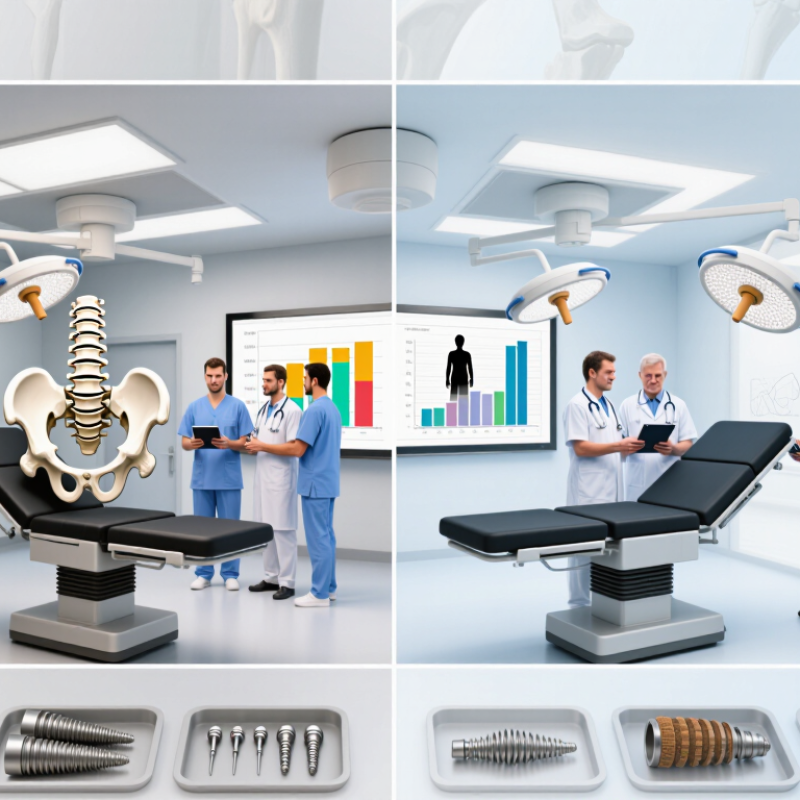
In 2026, “domestic orthopedic implant” usually means the device is manufactured within the purchasing country. The definition may also depend on local regulatory rules. An imported implant is made outside that market, even when a local distributor supplies it. Ownership does not decide the category. A foreign-owned factory operating locally may produce a domestic device. A local company using an overseas factory may sell an imported implant.
The production site matters more than the office address. Procurement teams should verify manufacturing records, sterilization location, packaging details, and lot traceability. Digital device records can make this review faster, but data quality still varies. It should be checked carefully. Regulatory authorization, material specifications, fatigue testing, and clinical evidence deserve equal attention. Country of origin is not a quality score.
In hospital evaluations, practical differences often appear after purchase. Domestic supply may offer shorter delivery times and faster technical support. Imported products may provide broader design options, but shipping delays can affect revision planning. Surgeons should examine instrument availability, training requirements, and long-term follow-up data. Price comparisons can also mislead when maintenance and inventory costs are excluded. I would not treat a domestic label as automatic proof of safety or reliability. Some procurement assumptions remain untested.
Comparing domestic and imported orthopedic implants starts with the device, not its country label. Ask which alloy or polymer is used, how its surface is treated, and whether coatings have documented wear and corrosion performance. Small differences matter. A porous surface may support bone attachment, but performance depends on pore structure, manufacturing consistency, and clinical setting. Request material specifications, sterilization details, and batch traceability; marketing language is not a substitute.
Assess design against the patient and procedure. Compare geometry, available sizes, fixation options, and instrument compatibility. For a hip stem, the taper, offset, and size range can affect fit and surgical choices. A device that looks familiar in a catalog may feel different in the operating room. That deserves a closer look.
Clinical evidence is the harder comparison. Review peer-reviewed studies, registry data where available, follow-up duration, revision rates, and patient-reported outcomes. Check whether participants resemble the patients being treated and whether studies compare similar procedures and implant generations. Early results can be reassuring, yet say little about long-term wear. Evidence is often uneven. Note gaps openly rather than treating missing reports as proof of failure—or safety. Surgeon familiarity, follow-up access, and the ability to investigate complications also matter; these practical factors can shape outcomes alongside material and design.
| Comparison dimension | Domestic implant | Imported implant | What to verify when comparing |
|---|---|---|---|
| Country of origin | Manufactured in the country identified in the device’s regulatory and supply-chain records. | Manufactured outside the country of use; the device may be subject to local import and registration requirements. | Confirm the actual manufacturing location, legal manufacturer, product registration, and authorized local supply. Origin alone does not establish clinical quality. |
| Common implant materials | May use established orthopedic materials such as titanium alloys, cobalt-chromium alloys, stainless steel, polyethylene, or ceramic, depending on the implant type. | May use the same broad material classes; specifications vary by product and intended use. | Check the exact alloy or polymer specification, material grade, applicable standards, and material compatibility. Do not infer material composition from country of origin. |
| Material standards and testing | Material controls and testing should be documented against applicable national and international requirements. | Material controls and testing should be documented against the requirements applicable to the manufacturing and destination markets. | Review certificates, test methods, traceability, and the current versions of relevant standards. Examples include ISO 5832 series for metallic implant materials and ISO 5834 series for ultra-high-molecular-weight polyethylene. |
| Design and sizing | Available geometries, sizes, and instrumentation are product-specific; some systems may be designed around local anatomical data or practice needs. | Available geometries, sizes, and instrumentation are also product-specific and may reflect the manufacturer’s intended patient population and surgical approach. | Compare the complete size range, anatomical fit, fixation options, compatible instruments, and the surgeon’s experience with the system. Ask for supporting design-validation data where relevant. |
| Surface and coating | Surface finish, porous structure, or coating depends on the device and its intended fixation method. | Surface finish, porous structure, or coating likewise depends on the specific device rather than its import status. | Check the coating or surface specification, manufacturing controls, evidence for the intended fixation, and any applicable safety or performance testing. |
| Regulatory authorization | Must meet the applicable regulatory requirements in the market where it is sold and used. | Must meet the destination market’s requirements; clearance or authorization in another country does not automatically confer local authorization. | Verify the current registration or authorization for the exact model and intended use with the relevant national regulator. Regulatory pathways and terminology differ by jurisdiction. |
| Clinical evidence | Evidence may include clinical studies, registry data, post-market surveillance, and published outcomes; availability and quality vary by product. | Evidence may include the same types of data; availability and quality also vary by product. | Assess evidence for the exact implant or a clearly justified equivalent: patient population, follow-up duration, endpoints, complications, revision rates, and study limitations. Publication count alone is not proof of superiority. |
| Long-term outcomes | Long-term follow-up may be available for some devices and limited for newer devices; check the specific product’s record. | Long-term follow-up may be available for some devices and limited for newer devices; check the specific product’s record. | Compare like with like: implant type, indication, patient risk profile, surgical technique, follow-up period, and definition of failure or revision. |
| Manufacturing quality and traceability | Quality systems and traceability should be documented for the manufacturer and device. | Quality systems and traceability should be documented, including controls relevant to imported distribution. | Request device identification and lot or serial traceability, quality-system documentation, and processes for handling complaints, recalls, and adverse events. |
| Availability and logistics | Local production may affect lead times or access to certain sizes, but availability depends on the supplier and distribution network. | International shipping, customs, or distributor arrangements may affect lead times, but local inventory can also be maintained. | Confirm stock availability, replenishment times, instrument support, storage requirements, and contingency plans for the full treatment pathway. |
| Cost and total value | Purchase price and associated costs vary by device, contract, service, and market. | Purchase price and associated costs may include import, distribution, or service components, depending on the market. | Compare total cost of care—not just purchase price—including instruments, training, follow-up, complication management, and any relevant reimbursement rules. |
| Practical decision rule | A domestic device may be appropriate when it meets clinical needs, has suitable evidence, and is properly authorized and supported. | An imported device may be appropriate when it meets clinical needs, has suitable evidence, and is properly authorized and supported. | Choose by indication-specific evidence, regulatory status, material and design suitability, surgeon familiarity, patient factors, and reliable support—not by domestic or imported status alone. |
Note: Orthopedic implant performance is product- and indication-specific. This comparison is a general evaluation framework, not a ranking or a substitute for regulatory review, clinical judgment, or advice from a qualified orthopedic care team.
When comparing domestic and imported orthopedic implants in 2026, start with the approval pathway in the country where the device will be used. Check the regulator’s public records for the exact model, intended use, and approved indications. An approval for one implant type does not automatically cover another. Imported products may have approvals elsewhere, but those records do not replace local authorization. Details matter.
Quality standards deserve equal attention. Ask for current quality-system certificates, sterilization validation, material specifications, and lot-level traceability. Standards such as ISO 13485 can indicate a structured quality system, but certification alone cannot prove that every implant performs equally in practice. Review inspection records and post-market safety information where available. If documents are incomplete or difficult to verify, pause and ask the supplier or clinical team for clarification. I have seen how small gaps in paperwork can slow a careful review; they should not be waved away.
Tips: Compare the same details for each option: regulatory status, implant materials, manufacturing controls, and adverse-event reporting. Confirm that labels and instructions match the approved use. A familiar origin is not a quality measure. Nor is a lower price proof of weaker control. Local supply can simplify communication, while imported supply may offer different designs; neither point settles the clinical question. Discuss fit and patient-specific risks with a qualified orthopedic professional.
Key international standards often referenced in medical-device quality management, risk management, biological evaluation, and implant-material specifications. Edition dates are shown for context—not as scores of product quality.
A standard’s edition year does not establish that a specific implant is approved or superior. Compare products by checking the applicable regulator’s authorization, the exact device and intended use, conformity documentation, and current standards adopted in the relevant market. Domestic and imported devices are subject to the rules of the market where they are sold.
Comparing domestic and imported orthopedic implants requires more than checking the purchase price. Ask for an itemized estimate covering the implant, shipping, customs charges where applicable, surgical instruments, and follow-up care. A lower quoted price may not include replacement components or training. Read the details carefully.
Availability can affect treatment schedules. Confirm current stock, typical delivery times, and how urgently needed sizes are supplied. Ask whether the hospital can access compatible instruments and replacement parts without delaying a procedure. A product listed as available may still be difficult to obtain in the required configuration. Verify with the clinical and procurement teams, not just a sales estimate.
After-sales support matters over the implant’s working life. Find out who answers technical questions, how quickly support responds, and what happens if a component is missing or damaged. Request clear documentation, including instructions for use, traceability records, and warranty terms. Local support may be easier to reach, while an imported option may offer a different service structure. Neither is automatically better. Compare actual response commitments and service history where available. One limitation: estimates can change, and written promises do not guarantee a smooth experience. Record what matters to your hospital before deciding.
Comparing domestic and imported orthopedic implants should begin with the patient, not the country of manufacture. Bone density, anatomy, activity level, allergies, and revision risk all influence implant selection. A younger patient with strong bone may need different fixation than an older patient with osteoporosis. Surgical approach matters too. An implant that fits one technique may complicate another. Experienced surgeons review imaging, instrument compatibility, and evidence before discussing cost.
Tips: Check regulatory clearance, clinical data, sterilization records, and supplier support. Ask whether replacement instruments and components can arrive promptly. Confirm that the implant matches the patient’s anatomy and the planned surgical method. Do not treat a lower price as proof of value. It may reduce the initial bill but increase training or logistics demands. That assumption deserves scrutiny.
Imported implants may offer specialized designs or longer follow-up histories. Domestic options may provide easier communication, faster supply, or better adaptation to regional clinical practice. Neither category is automatically safer or more effective. Outcomes depend on design quality, surgical accuracy, patient selection, and postoperative care. Surgeons should explain these trade-offs in plain language. Patients also need realistic expectations about pain, rehabilitation, and possible revision. In practice, the “best” implant is sometimes the one with dependable support, not the most advanced label. Even careful decisions can be imperfect. Reviewing outcomes regularly helps teams refine future choices.
No. Compare the device itself, not its country label. Review materials, design, evidence, approval, and support.
Ask about the alloy or polymer, surface treatment, sterilization, and batch traceability. Coatings need documented wear and corrosion performance.
It may help. Results depend on pore structure, manufacturing consistency, and the clinical setting. Appearance alone proves little.
Check geometry, sizes, fixation options, and instrument compatibility. For hip stems, taper and offset can affect fit.Small differences matter.
Review peer-reviewed studies, registry data, follow-up time, revision rates, and patient-reported outcomes. Confirm that study patients resemble the intended patients.
No. Check the local regulator’s records for the exact model, intended use, and approved indications. Similar names can mislead.
Request current quality-system certificates, sterilization validation, material specifications, and lot-level traceability. Check post-market safety information when available.Missing paperwork matters.
Request an itemized estimate covering the implant, shipping, customs charges, instruments, training, and follow-up care. A low quote may exclude replacement parts.
Confirm current stock, delivery times, required sizes, compatible instruments, and replacement parts. A catalog listing does not guarantee timely supply.
Ask who handles technical questions, response times, damaged components, documentation, and warranty terms. Written promises help, but they cannot guarantee smooth service.
This guide explains how to compare domestic and imported orthopedic implants in 2026 using practical, evidence-based criteria. What are the differences between domestic and imported orthopedic implants? The answer depends on more than country of origin. Materials, implant design, manufacturing precision, durability, compatibility with surgical techniques, and the quality of clinical evidence should all be reviewed. Regulatory approval, quality-control systems, traceability, and compliance with applicable medical-device standards are also essential when evaluating safety and reliability.
The comparison should include the complete cost of treatment, not only the initial purchase price. Hospitals and patients should consider availability, delivery times, inventory stability, surgical instruments, technical training, warranty terms, and after-sales support. Ultimately, the most suitable implant is the one that matches the patient’s anatomy, diagnosis, activity level, surgical plan, and long-term care needs. A structured evaluation can help clinicians and healthcare providers make balanced decisions based on evidence, safety, value, and individual patient requirements.

HBM Medical