Selecting orthopedic implants for hand and foot surgery is a critical decision that directly impacts patient outcomes. Approximately 20 million orthopedic procedures occur annually in the United States, with a significant portion involving hand and foot surgeries. The right implant can enhance recovery and functionality while reducing complications.
Understanding how to select orthopedic implants for hand and foot surgery requires careful consideration of various factors. Material types, dimensions, and the specific anatomical requirements of patients must be weighed. Recent studies indicate that over 30% of implant failures are due to inadequate selection processes. This highlights the need for surgeons to rely on both clinical data and personal experience when making implant choices.
The success of orthopedic surgeries often hinges on collaboration among surgical teams and thorough preoperative assessments. Inaccuracies in implant selection can lead to prolonged rehabilitation or, worse, secondary surgeries. As orthopedic technology advances, the need for precise and informed decision-making has never been more vital. The importance of this topic cannot be overstated, as it shapes the future of surgical practices in orthopedic care.
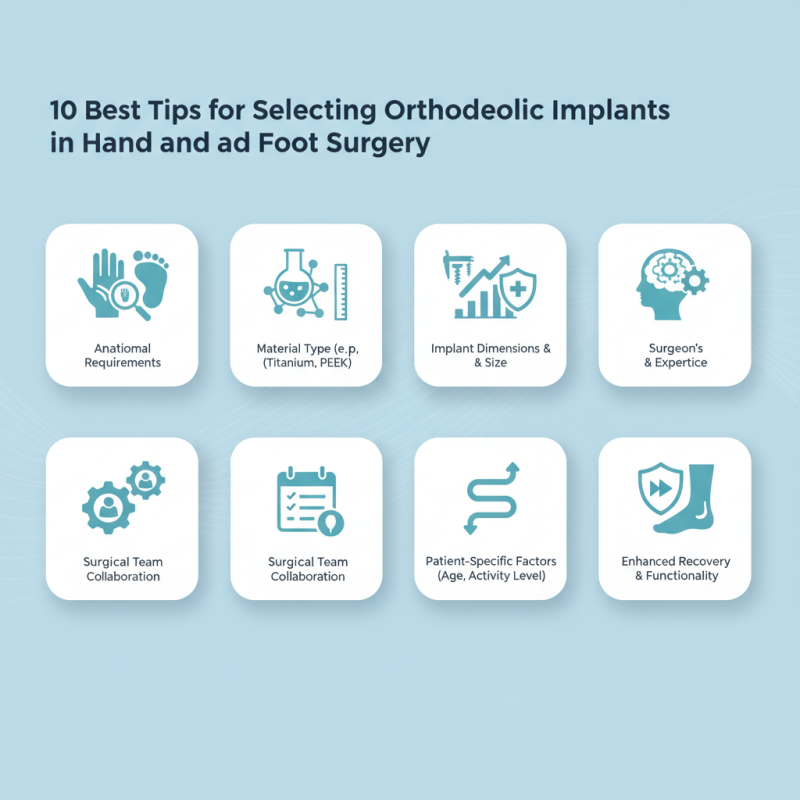
When selecting orthopedic implants for hand and foot surgery, several key factors come into play. The patient's specific anatomy and condition are paramount. Surgeons must consider the alignment and size of bones. Each case is unique, and this complexity requires a deep understanding of biomechanics. Familiarity with the latest materials is also crucial. Different implants can significantly affect recovery time and mobility.
Surgeons often weigh the expected longevity of the implant against the patient’s age and activity level. A younger patient may need a more durable solution, while an older individual may not require the same level of resilience. Additional factors include potential complications and the patient’s overall health. The choice of implant can influence both short-term outcomes and long-term success.
Feedback from previous surgical outcomes can guide decisions. Surgeons may reflect on their experiences with certain types of implants. Not every implant will perform as expected; sometimes, they fail to integrate well. Additionally, the need for revisions can be a challenging reality. A thoughtful approach to these factors can improve surgical outcomes and enhance patient satisfaction.
When selecting implants for foot surgery, understanding material properties and strength requirements is crucial. The ideal materials must withstand the stresses of everyday activities. Titanium and stainless steel often provide excellent strength and corrosion resistance. Yet, they can be rigid, which may affect bone integration over time. Biodegradable options exist, but their long-term reliability remains uncertain.
Different parts of the foot demand different implant characteristics. For instance, the metatarsals require implants that can endure significant load, while phalangeal implants do not need the same level of durability. Surgeons sometimes struggle to find implants that balance strength without adding excess weight. Testing prototypes under various conditions may help refine choices.
The compatibility between the implant material and human tissue is essential. Allergic reactions to certain metals can occur. Studies have explored using composite materials to address this but often lack comprehensive data. Continuous improvement in implant technology is necessary, but the pursuit of the perfect solution remains ongoing. Each choice presents a unique set of challenges that requires thoughtful consideration.
| Tip Number | Material Type | Strength Requirements | Biocompatibility | Cost |
|---|---|---|---|---|
| 1 | Titanium Alloy | High tensile strength | Excellent | $$$ |
| 2 | Stainless Steel | Moderate strength | Good | $$ |
| 3 | Cobalt-Chromium | Very high strength | Excellent | $$$$ |
| 4 | Polyetheretherketone (PEEK) | Good strength | Very good | $$$ |
| 5 | Bioactive Glass | Variable | Excellent | $ |
When selecting orthopedic implants for hand and foot surgery, customization is crucial. Each patient presents unique anatomical variations. Accurate sizing is essential to ensure optimal implant fit. A properly sized implant can significantly impact recovery outcomes. Surgeons often take precise measurements of the patient's anatomy preoperatively. Tools like 3D imaging assist in visualizing complex structures. Yet, human error remains a factor, requiring ongoing review and adjustment during procedures.
The choice of materials also matters. Biocompatibility is key to prevent complications. While standard implants may work, custom options can provide better integration. Surgeons must weigh the balance of cost and patient-specific needs. The learning curve involved in implementing customized solutions can be daunting. It's a journey filled with trial and error. Continuous education and experience help refine techniques.
Surgeons must also consider patient lifestyle and mobility. The biomechanics of the implant should align with the patient’s goals. This can mean adjusting angles or using different fixation methods. Feedback from past surgeries should inform future choices. Each decision influences recovery and overall satisfaction. Effective communication with patients about these facets is needed. Their input can help in selecting the most appropriate solutions.
Selecting orthopedic implants for hand and foot surgery requires careful evaluation of long-term outcomes. The success of an implant can be defined by how well it integrates with the body over time. Understanding potential complications is crucial. Some patients may experience issues like infection or implant failure, which could lead to further surgeries.
Tip one: Collaborate with experienced orthopedic surgeons. Their insights will help you choose the right implant type based on specific cases. Moreover, consider factors like the patient's age and activity level. These details influence healing and overall success.
Tip two: Research different implant materials. Titanium and biodegradable options have distinct pros and cons regarding durability and rejection rates. Reading patient testimonials can guide you through their experiences with specific materials. While outcomes are generally positive, remember that reactions can vary dramatically among individuals.
It's essential to reassess the decision after surgery. Monitoring how well the implant performs over time helps identify potential issues early. Communication with the surgical team can identify unexpected complications, ensuring timely solutions. Aim for a balanced perspective on the selection process, recognizing both strengths and weaknesses.
This chart illustrates the importance of evaluating long-term outcomes and complications associated with various orthopedic implant options.
3D printing has revolutionized the field of orthopedic implants, especially in hand and foot surgery. This technology allows for the creation of highly customized implants tailored to an individual's specific anatomy. Surgeons can use precise imaging to design implants that fit perfectly, reducing complications and improving recovery times. The ability to produce complex shapes easily enhances functionality, making surgery more effective.
However, using 3D printing in this field is not without challenges. The materials used must ensure biocompatibility and durability. Sometimes, the technology itself can create imperfections in the implant. These flaws need careful evaluation before use. Surgeons must stay updated on advancements to avoid potential pitfalls. With ongoing research, the future of 3D-printed implants looks promising, yet caution is always necessary.
Careful selection of materials is critical. The newest plastics and metals might not have proven long-term success. Practitioners must balance innovation with reliability. Close collaboration with engineers and researchers is vital. This partnership can lead to improved outcomes and reliable implant options. Embracing technology is essential, but so is ensuring patient safety during this transition.
: Titanium and stainless steel are often used for their strength and corrosion resistance.
It prevents allergic reactions and ensures a better integration with human tissue.
Finding the right balance between strength and weight can be difficult.
It allows for highly customized implants that fit an individual's anatomy perfectly.
They may have imperfections that require careful evaluation before use.
It is crucial, as new materials may not have a proven long-term success record.
Their long-term reliability is still uncertain, which raises concerns.
They collaborate closely with surgeons to improve outcomes and provide reliable options.
While innovation is essential, ensuring safety during the transition is equally important.
The pursuit of the perfect implant material is an ongoing challenge requiring continuous improvement.
Selecting the right orthopedic implants for hand and foot surgery is crucial for achieving optimal surgical outcomes. Several factors influence this decision, including the specific requirements of the surgery, material properties, and the strength needed for the implants. Understanding these factors can significantly impact the effectiveness and longevity of the implants.
Best practices recommend careful sizing and customizing implants to fit individual patient needs. Additionally, evaluating long-term outcomes and possible complications associated with different implant options is essential for informed decision-making. With advancements in technology, particularly the use of 3D printing, surgeons can now create more precise and patient-specific implants, enhancing the overall success of hand and foot surgeries. Ultimately, understanding how to select orthopedic implants for hand and foot surgery involves a comprehensive approach that considers both patient-specific factors and technological advancements.

HBM Medical